Introduction
Food preparation is one of the most time-consuming parts of home cooking, especially when dealing with vegetables, fruits, and ingredients that require consistent cutting styles. Over the years, kitchen tools have evolved to help simplify this process, and one of the most commonly used categories today is the manual vegetable chopper and dicer system.
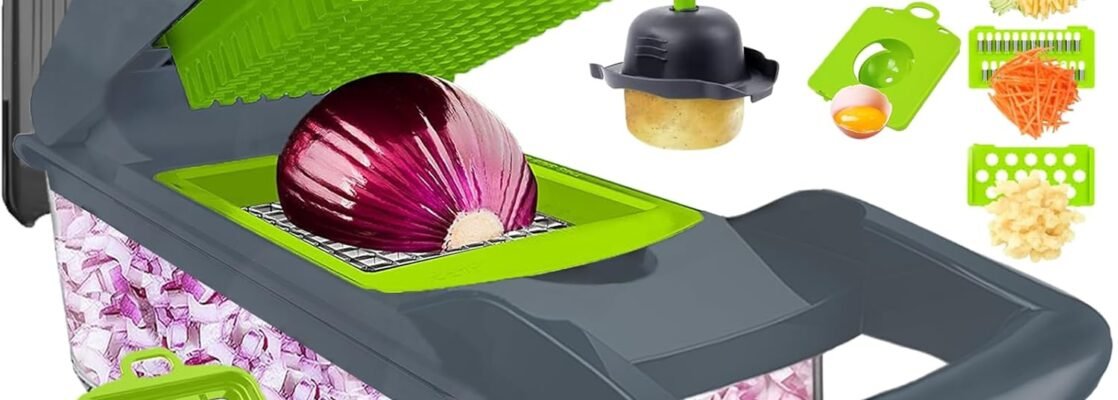
The Vegetable Chopper Dicer with Container is a multifunctional kitchen tool designed to assist with cutting, slicing, shredding, and dicing a variety of ingredients such as onions, potatoes, cucumbers, carrots, cheese, and more. Instead of relying entirely on knives and cutting boards, this type of tool provides structured cutting options through interchangeable blades and manual pressure-based operation.
This article explores how this type of kitchen gadget works, its general features, possible uses, limitations, and what users should consider before choosing such a tool for everyday cooking.
Key Features of a Vegetable Chopper Dicer System
While designs may vary slightly depending on the manufacturer, most vegetable chopper and slicer kits share a number of core components and functional features.
1. Interchangeable Stainless Steel Blades
A defining feature of this category of kitchen tools is the set of interchangeable blades. These are typically made of stainless steel to support durability and resistance to rust under normal kitchen conditions.
Common blade types include:
- Dicing blades for cubes (small, medium, or large cuts)
- Julienne blades for thin strips
- Slicing blades for even, flat cuts
- Grating blades for cheese or vegetables
- Shredding attachments for cabbage or leafy vegetables
Each blade is designed to produce a consistent cutting style, reducing the need for manual precision.
2. Built-in Container for Food Collection
Most vegetable choppers include a container placed beneath the cutting grid. This container collects chopped ingredients directly after slicing, reducing mess on the countertop and simplifying transfer to cooking pots or bowls.
This feature is especially helpful in meal preparation environments where multiple ingredients are being prepared simultaneously.
3. Manual Hand-Press Operation
Unlike electric food processors, this type of tool operates manually. The user applies downward pressure on a lid or handle to push food through the blade grid.
This mechanism offers:
- Full control over cutting speed
- No need for electricity
- Simpler cleaning process in many cases
4. Compact Kitchen Design
Most models are designed to be compact and easily stored in kitchen drawers or cabinets. They are often used as space-saving alternatives to larger electric appliances.
5. Multi-Purpose Functionality
In many cases, a single tool replaces multiple kitchen gadgets such as:
- Knife and chopping board
- Grater
- Mandoline slicer
- Fry cutter
- Vegetable shredder
This combination of functions makes it a versatile addition to everyday cooking setups.
How It Can Be Used in Everyday Cooking
A vegetable chopper dicer is not limited to a single type of food preparation. It can be used across a wide range of recipes and cooking styles.
1. Preparing Vegetables for Cooking
One of the most common uses is preparing vegetables such as:
- Onions
- Tomatoes (firm varieties)
- Bell peppers
- Carrots
- Zucchini
- Cucumbers
The tool helps create consistent sizes, which can improve cooking uniformity.
2. Salad Preparation
For salads, uniform cuts can improve both texture and presentation. A vegetable chopper can quickly prepare ingredients such as:
- Lettuce shredding
- Cabbage slicing
- Cucumber dicing
- Carrot shredding
This reduces preparation time significantly for large salads or meal prep routines.
3. Potato Cutting and Fry Preparation
Some models include attachments that allow potato slicing into sticks or cubes. This is commonly used for preparing homemade fries or roasted potatoes.
4. Cheese Grating
Certain blade inserts are designed for grating cheese. This can be useful for pasta dishes, salads, and baked meals.
5. Fruit Preparation
Soft but firm fruits like apples, pears, or melons can be cut into uniform pieces for desserts, fruit salads, or snacks.
6. Meal Prep for Weekly Cooking
For individuals who prepare meals in advance, a chopper can reduce the time spent on repetitive cutting tasks, especially when handling large quantities of vegetables.
Who It May Be Suitable For
This type of kitchen tool is designed for a wide range of users, but it may be especially useful in certain situations.
1. Home Cooks with Limited Time
People who cook daily but want to reduce preparation time may find this tool helpful for speeding up basic tasks.
2. Beginners in Cooking
For those who are still developing knife skills, a vegetable chopper can provide a more structured and safer alternative to manual cutting.
3. Meal Prep Enthusiasts
Individuals who prepare food in batches for the week often benefit from faster and more consistent chopping.
4. Small Kitchens
In kitchens where space is limited, replacing multiple tools with a single multifunctional device can be practical.
5. Families
Households preparing meals for multiple people often deal with larger quantities of ingredients, making efficient chopping tools useful.
Important Things to Consider Before Choosing a Vegetable Chopper
Although vegetable choppers can be very useful, there are several factors to keep in mind before deciding to use or purchase one.
1. Blade Quality and Maintenance
The effectiveness of the tool depends heavily on blade sharpness and durability. Stainless steel is commonly used, but blades still require proper cleaning and careful handling.
2. Food Hardness Limitations
Not all ingredients are suitable for manual choppers. Very hard foods or extremely soft foods may not perform well.
Examples:
- Hard foods like frozen ingredients may damage blades
- Very soft tomatoes may get crushed instead of sliced cleanly
3. Cleaning Requirements
Even though many models are designed for easier cleaning, multiple blade attachments can require careful washing to avoid residue buildup.
4. Safety Considerations
Since blades are extremely sharp, proper handling is essential during assembly, use, and cleaning. Some models include protective accessories, but caution is always necessary.
5. Consistency of Cuts
While these tools aim to provide uniform results, consistency can vary depending on how the food is placed and pressed.
Comparison of General Kitchen Cutting Methods
To understand where a vegetable chopper fits in, it is helpful to compare it with other common food preparation methods.
1. Manual Knife Cutting
Traditional knife cutting offers:
- Full control over size and shape
- Flexibility for all types of food
- Requires skill and practice
However, it can be time-consuming and inconsistent for large quantities.
2. Electric Food Processors
Electric processors provide:
- Fast processing speed
- Less manual effort
But they often:
- Require electricity
- Take more storage space
- Have more complex cleaning requirements
3. Mandoline Slicers
Mandoline slicers are excellent for:
- Thin, even slicing
- Fast vegetable preparation
But they usually:
- Have limited functionality compared to multi-blade choppers
- Require careful handling for safety
4. Vegetable Chopper Dicer Tools
These tools sit between manual and electric options by offering:
- Moderate speed improvement
- Multiple cutting styles in one device
- Compact design
- No electricity requirement
Each method has its own advantages depending on the cooking style and user needs.
Practical Tips for Better Use
To improve performance and safety when using a vegetable chopper dicer, the following tips may help:
- Cut larger vegetables into smaller sections before placing them in the device
- Avoid forcing hard foods through blades
- Clean blades immediately after use to prevent food drying
- Store blades in a safe, dry place
- Use stable surface placement during operation
These practices help maintain both performance and longevity of the tool.
Frequently Asked Questions (FAQ)
1. Can this tool replace a knife completely?
Not entirely. While it can handle many chopping tasks, a knife is still needed for certain detailed or specialized cuts.
2. Is it suitable for all vegetables?
It works well for most common vegetables, but extremely hard or very soft foods may not be ideal.
3. Does it require electricity?
No. This is a manual kitchen tool operated by hand pressure.
4. Is it difficult to clean?
Cleaning is generally manageable, but blade care is important due to sharp edges and multiple components.
5. Can it be used for meal prep?
Yes, it is commonly used for preparing larger batches of ingredients for weekly cooking.
Conclusion
The Vegetable Chopper Dicer with Container represents a practical category of kitchen tools designed to simplify everyday food preparation. With multiple blade options, a compact structure, and manual operation, it offers a flexible approach to cutting vegetables, fruits, and other ingredients.
While it does not replace all traditional cooking tools, it can significantly reduce preparation time and improve consistency in everyday cooking routines. Its usefulness depends largely on cooking habits, ingredient types, and personal preferences in the kitchen.
For users interested in exploring this type of kitchen gadget further,