Rice is one of those ingredients that appears in countless everyday meals, yet getting consistent results from a stovetop pot can sometimes require more attention than expected. Water ratios, heat levels, cooking time, and resting periods can all affect the final texture. A digital rice cooker approaches the process differently by automating much of the cooking cycle.
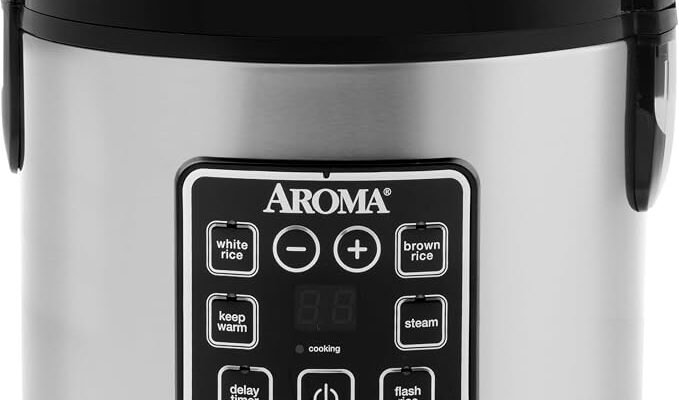
The AROMA Digital Rice Cooker ARC-914SBD is designed for households that want a dedicated countertop appliance for preparing rice while also having the flexibility to steam foods and cook other grains. The model is listed with a capacity of 4 cups of uncooked rice, producing up to 8 cups cooked, along with a 2-quart capacity classification and a stainless steel exterior.
Rather than being limited to plain white rice, a multifunction rice cooker can become part of a broader meal-preparation routine. Depending on the selected program and recipe, it can be used for different varieties of rice, grains, steamed vegetables, and other dishes that benefit from controlled, enclosed cooking.
This guide looks at the AROMA ARC-914SBD from an informational perspective. It explains how the appliance works, what its main features mean in practical terms, how it can be incorporated into everyday cooking, who may find this size appropriate, and what to consider before choosing a digital rice cooker.
The goal is not to provide a personal review or make claims about individual cooking experiences. Instead, this article focuses on practical information that can help readers understand the appliance and decide whether its format fits their kitchen routine.
Introduction to the AROMA ARC-914SBD Rice Cooker
A rice cooker is designed to simplify a task that traditionally requires a saucepan, measuring, monitoring, and timing.
The basic process is straightforward: rice and an appropriate amount of liquid are placed into the cooking vessel, a program is selected, and the appliance controls the heating process according to its programmed cycle.
The AROMA ARC-914SBD takes this concept further with digital controls and additional cooking functions.
The appliance is designed around a 4-cup uncooked rice capacity, which corresponds to up to 8 cups of cooked rice depending on the rice variety, preparation method, and cooking conditions.
This distinction between uncooked and cooked capacity is important.
Four cups of dry rice can expand considerably during cooking. Therefore, the 8-cup cooked capacity does not mean that the appliance holds eight cups of uncooked rice.
The appliance can be useful for preparing rice for:
- Family dinners
- Meal preparation
- Stir-fries
- Rice bowls
- Curries
- Grilled meats
- Vegetable dishes
- Lunches
- Side dishes
Its steaming capability also allows users to prepare certain vegetables, proteins, and other foods alongside rice when the recipe and included accessories are appropriate.
Key Features of the AROMA ARC-914SBD
4-Cup Uncooked and 8-Cup Cooked Capacity
Capacity is one of the first things to consider when choosing a rice cooker.
The ARC-914SBD is designed to accommodate up to 4 cups of uncooked rice, producing approximately 8 cups of cooked rice.
This size can work well for households that regularly prepare several servings at once.
It can also be useful for meal preparation because a single cooking cycle can produce enough rice for multiple meals.
For example, a batch of cooked rice can be used for:
- Dinner
- Lunch the following day
- Rice bowls
- Fried rice
- Side dishes
- Meal-prep portions
The actual cooked volume varies according to the type of rice and cooking method, so the stated capacity should be viewed as a guide rather than a guarantee for every grain.
Understanding Rice Cooker Capacity
Rice cooker capacity is often expressed using a traditional rice-cooker measuring cup rather than the standard measuring cup used in many Western recipes.
This is important when following the manufacturer’s instructions.
If the appliance includes a rice measuring cup, using that cup for the recommended rice measurements can help maintain the intended rice-to-water relationship.
Replacing it with a different measuring cup without adjusting the recipe may change the proportions.
For consistent results, it is useful to follow the measurement method specified in the appliance’s instructions.
Digital Controls
The digital control system is designed to make the cooking process more structured.
Instead of manually adjusting a stovetop burner throughout the cooking cycle, users can select the appropriate program and allow the appliance to manage the heating process.
Digital controls can be useful for people who frequently prepare:
- White rice
- Brown rice
- Other grains
- Steamed foods
- Meal-prep recipes
The control panel also makes it easier to select different cooking modes according to the food being prepared.
As with any preset appliance, however, a program should be treated as a starting point. Rice varieties differ in moisture content, grain structure, age, and cooking requirements.
Stainless Steel Exterior
The ARC-914SBD features a stainless steel exterior.
Stainless steel is commonly used on kitchen appliances because it provides a durable exterior surface and can fit into a wide variety of kitchen designs.
The exterior can be wiped clean after cooking, although users should follow the manufacturer’s care instructions.
The stainless steel exterior is separate from the cooking surface inside the appliance, so it should not be assumed that every component has the same material or cleaning requirements.
Rice Cooking
Rice is the primary purpose of the appliance.
Depending on the selected program and recipe, it can be used for several common rice varieties.
These may include:
- White rice
- Brown rice
- Long-grain rice
- Short-grain rice
- Jasmine-style rice
- Basmati-style rice
- Other suitable varieties
Different types of rice absorb water differently.
For this reason, the water ratio used for one variety should not automatically be applied to another.
Following the manufacturer’s cooking instructions or a reliable recipe can provide a more useful starting point.
Brown Rice Cooking
Brown rice retains more of the grain’s outer layers than white rice, which changes its cooking requirements.
It generally needs:
- More water
- More cooking time
- Different preparation than some white rice varieties
A dedicated brown-rice setting, where available, can simplify the process by providing a cooking program designed around those differences.
However, exact results still depend on the specific rice being used.
Different brands and varieties can require adjustments.
Steaming Capability
One of the useful additions to a rice cooker is a steaming function.
Steaming uses hot vapor rather than direct contact with boiling water.
Depending on the included accessories and instructions, the appliance can be used to steam foods such as:
- Broccoli
- Carrots
- Green beans
- Cauliflower
- Asparagus
- Dumplings
- Fish
- Chicken
- Other suitable foods
Steaming can also be incorporated into a larger meal.
For example, rice can form the base of a meal while vegetables are prepared using the steaming accessory.
Cooking Rice and Steamed Food Together
One advantage of a rice cooker with a steaming function is the possibility of preparing multiple components of a meal using the same appliance.
A simple example is:
Rice + Broccoli
The rice cooks in the main cooking vessel while the broccoli is placed in the appropriate steaming basket or tray.
Another combination could be:
Rice + Fish
or:
Rice + Mixed Vegetables
The exact timing depends on the ingredients.
Foods that require only a short steaming period may need to be added later in the cooking process rather than placed into the steamer from the beginning.
Grain Cooking
The appliance is also designed for grain cooking.
Rice is technically a grain, but the same general concept can be applied to other grains when the appliance’s programs and instructions support them.
Potential examples include:
- Quinoa
- Barley
- Couscous
- Other suitable grains
Different grains require different amounts of liquid and cooking times.
For that reason, grain cooking should be approached individually rather than assuming that one rice-to-water ratio works for every ingredient.
Multicooker Applications
Calling a rice cooker a multicooker does not mean it functions exactly like a pressure cooker or full-size slow cooker.
Instead, a multifunction rice cooker can provide several cooking modes within the capabilities of its heating system and cooking vessel.
These functions can make the appliance useful beyond plain rice.
Potential recipes may include:
- Rice dishes
- Grain bowls
- Steamed vegetables
- Oatmeal
- Soups
- One-pot meals
- Simple mixed rice dishes
Always check whether a particular recipe is appropriate for the appliance and whether the cooking vessel has enough capacity.
Meal Preparation With the AROMA Rice Cooker
Meal preparation is one of the practical reasons to choose a medium-capacity rice cooker.
A batch of rice can be prepared once and then divided into several portions.
For example:
Monday
Rice + grilled chicken + vegetables
Tuesday
Rice bowl + beans + avocado
Wednesday
Fried rice using leftover cooked rice
Thursday
Rice + fish + steamed vegetables
A single batch can therefore become part of several meals.
Proper refrigeration and food-safety practices are important when storing cooked rice.
Cooked rice should not simply be left at room temperature for extended periods.
Rice Bowls
Rice bowls are an easy way to use a rice cooker as part of a complete meal.
A basic bowl can contain:
- Cooked rice
- Protein
- Vegetables
- Sauce
- Herbs
- Seeds or other toppings
The rice cooker handles the base while the other ingredients can be prepared separately.
For example:
Rice + Chicken + Broccoli + Soy-Based Sauce
or:
Rice + Salmon + Cucumber + Avocado
The rice itself can be prepared in advance, making assembly quicker later.
Stir-Fry Preparation
Rice cookers can also fit naturally into stir-fry meals.
The rice can be prepared first while vegetables and protein are cooked separately in a skillet or wok.
This division of tasks allows the rice cooker to operate independently while the stovetop is used for ingredients that benefit from high-temperature frying.
The cooked rice can then be served alongside the stir-fry or used as a base.
Fried Rice
Leftover refrigerated rice is commonly used for fried rice because it tends to be less moist than freshly cooked rice.
A rice cooker can support the first stage by preparing the rice.
After cooling and refrigerating the rice appropriately, it can be used later with:
- Eggs
- Peas
- Carrots
- Green onions
- Chicken
- Shrimp
- Tofu
- Other vegetables
The frying itself is generally done in a skillet or wok unless the specific rice cooker instructions provide an appropriate cooking mode.
Steamed Vegetables
Steaming is one of the simplest ways to expand the appliance’s usefulness.
Vegetables such as broccoli and carrots can be steamed while rice cooks.
The process generally requires less direct supervision than cooking vegetables on the stovetop.
However, vegetables differ in density.
For example, broccoli florets may cook more quickly than thick carrot pieces.
Cutting ingredients into appropriate sizes can help them finish closer together.
Steamed Fish
Fish can also be prepared using a suitable steaming setup.
Potential choices include:
- Salmon
- Cod
- Tilapia
- White fish fillets
Seasonings can be added before steaming.
Because fish can cook relatively quickly, timing is important.
It should also be checked for proper doneness rather than relying solely on the cooking program’s default duration.
Steamed Dumplings
Depending on the size and design of the included steaming accessory, the appliance may also be suitable for dumplings.
This can provide a convenient way to prepare a meal component while rice cooks separately.
Do not overcrowd the steamer.
Steam needs room to move around the food.
Oatmeal and Breakfast Foods
A multifunction rice cooker can also be useful for breakfast.
Oatmeal is a natural example.
Possible ingredients include:
- Rolled oats
- Steel-cut oats when supported by the appliance and recipe
- Milk or water
- Cinnamon
- Fruit
- Nuts
- Seeds
The appropriate cooking method depends on the oat variety.
As with rice, different ingredients require different amounts of liquid.
Simple One-Pot Meals
A rice cooker can also be used for recipes where several ingredients cook together.
Examples may include:
- Rice and beans
- Chicken and rice
- Vegetable rice
- Rice with lentils
- Simple grain bowls
When cooking multiple ingredients in the same vessel, it is important to consider how each ingredient reacts to heat and moisture.
Ingredients that cook quickly may need to be added later.
Who the AROMA ARC-914SBD May Be Suitable For
Individuals
Someone who regularly eats rice can benefit from having a dedicated rice-cooking appliance, even when cooking for one person.
A batch can be prepared and divided into portions for several meals.
Couples
The 4-cup uncooked capacity provides enough room for more than a single meal in many situations.
Couples can use the appliance for dinner and save additional rice for another meal.
Small Families
A cooked capacity of up to approximately 8 cups can be useful for households that regularly serve rice as a side dish.
It can also support meal preparation for several days.
Rice-Focused Households
People who eat rice frequently may find a dedicated rice cooker particularly useful because the appliance is designed specifically around controlled rice cooking.
Meal Preppers
Meal preparation can benefit from batch cooking.
Rice, grains, and steamed vegetables can be prepared in advance and portioned for later meals.
Important Things to Consider
Capacity Should Match Your Household
A 4-cup uncooked capacity may be more than necessary for someone who only prepares a single serving occasionally.
On the other hand, households that frequently cook rice for several people may appreciate the larger batch capability.
Think about how much rice you typically prepare at one time.
Uncooked Versus Cooked Capacity
The difference between the two measurements is important.
The product is described as:
4 cups uncooked
and:
8 cups cooked
The rice expands during cooking as it absorbs water.
Therefore, the appliance should not be filled based on the assumption that eight cups of dry rice can fit inside.
Always follow the marked maximum fill line and manufacturer’s instructions.
Rice-to-Water Ratios Vary
There is no universal water ratio for every grain.
White rice, brown rice, basmati-style rice, jasmine-style rice, quinoa, and other grains can require different amounts of liquid.
Factors such as rinsing, soaking, rice age, and personal texture preference can also affect results.
Use the appropriate instructions for the specific ingredient.
Rinsing Rice
Some rice varieties benefit from rinsing before cooking.
Rinsing can remove excess surface starch and may affect the texture of the finished rice.
Whether to rinse depends on:
- Rice variety
- Recipe
- Desired texture
- Manufacturer’s instructions
Do not assume that every type of rice should be treated identically.
Steam Requires Care
The steaming function introduces hot steam, which can cause burns.
When opening the appliance after steaming, avoid placing your face or hands directly over the opening.
Use appropriate utensils or handles when removing a hot steaming tray.
Steam can remain trapped inside even after the cooking cycle ends.
Cleaning the Cooking Vessel
Regular cleaning helps maintain the appliance.
After cooking:
- Unplug the appliance when appropriate.
- Allow it to cool.
- Remove the inner cooking pot.
- Wash the removable components according to the manufacturer’s instructions.
- Wipe the exterior carefully.
- Clean any food residue.
- Dry components before storage.
Avoid immersing the electrical base unless the manufacturer specifically permits it.
Preventing Rice From Sticking
Some rice can stick to the bottom of a cooking vessel.
This can happen for several reasons, including:
- Rice variety
- Water ratio
- Cooking time
- Residual starch
- Holding time
- Temperature
Using the recommended water measurements and avoiding unnecessary overcooking can help.
Allowing rice to rest briefly after the cooking cycle may also improve texture, depending on the recipe.
Keeping Cooked Rice Safely
Cooked rice requires careful food handling.
Because cooked rice can support bacterial growth when left at unsafe temperatures for too long, it should be handled promptly.
A sensible routine is:
- Serve rice promptly.
- Refrigerate leftovers appropriately.
- Use clean containers.
- Avoid leaving cooked rice at room temperature for extended periods.
- Reheat only the amount needed when possible.
Food safety is just as important with rice as with meat or dairy products.
Comparing General Rice Cooker Categories
Rice cookers come in several categories.
Understanding the differences can help determine which type fits a particular kitchen.
Basic One-Touch Rice Cookers
These models typically focus on straightforward rice preparation.
They may have simple controls and fewer programs.
They can be suitable for people who primarily cook white rice and want minimal setup.
Digital Multifunction Rice Cookers
These models add programmable settings for different rice varieties and additional foods.
The AROMA ARC-914SBD belongs broadly to this category.
Digital controls can make the appliance more flexible for households that cook several types of food.
Small Personal Rice Cookers
Personal rice cookers are designed around small quantities.
They can be useful for:
- One person
- Small portions
- Compact kitchens
- Dorm-style living
Their limited capacity can become restrictive when cooking for several people.
Large Family Rice Cookers
Larger rice cookers are designed for households that regularly prepare substantial quantities.
They may provide enough capacity for gatherings or large meal-preparation sessions.
However, they can occupy more storage and countertop space.
Pressure Rice Cookers
Pressure-based models use a different cooking method and can often provide additional functions.
They may be useful for people who want a broader range of pressure-cooking applications.
The trade-off can include a different operating process and a more complex appliance design.
Practical Tips for Using the AROMA Rice Cooker
Measure Rice Carefully
Use the supplied measuring method rather than estimating quantities.
Consistent measurement helps maintain the intended rice-to-water ratio.
Use the Appropriate Program
Choose a cooking setting that matches the food.
A brown rice program, for example, may be designed differently from a white rice program.
Do Not Exceed the Maximum Fill Line
Rice expands during cooking.
Filling the pot beyond its intended capacity can interfere with cooking and potentially cause overflow.
Allow Rice to Rest
Depending on the rice variety, a short resting period after cooking can allow moisture to distribute more evenly.
Follow the manufacturer’s recommendations for the selected program.
Fluff Rice Before Serving
A rice paddle or suitable utensil can be used to gently separate cooked grains.
Avoid aggressively scraping a coated cooking surface with utensils that could damage it.
Using the Steamer More Effectively
Cut Vegetables Consistently
Vegetables cut to similar sizes tend to cook more evenly.
For example, thick carrot pieces may require more time than small broccoli florets.
Avoid Overcrowding
Steam needs space to circulate.
Packing too many vegetables into the steamer can reduce consistency.
Layer Foods Carefully
If steaming several ingredients at once, consider which foods require the most time.
Denser vegetables can be positioned appropriately according to the steamer design, while delicate foods may require shorter exposure.
Creating Complete Meals
A rice cooker becomes more useful when it is treated as part of a meal rather than as an appliance used only for rice.
Consider a simple dinner:
Rice + Steamed Broccoli + Grilled Chicken
The rice and broccoli can be handled by the rice cooker while the chicken cooks separately.
Another meal could be:
Brown Rice + Steamed Salmon + Vegetables
This approach allows the appliance to handle a significant part of the meal without requiring several stovetop pots.
Rice as a Meal-Prep Foundation
Rice can serve as a base for many different meals.
A batch prepared in the rice cooker can be divided into portions and combined with different ingredients throughout the week.
For example:
Meal One
Rice + chicken + broccoli
Meal Two
Rice + beans + roasted vegetables
Meal Three
Rice + salmon + cucumber
Meal Four
Fried rice + eggs + vegetables
Meal Five
Rice + tofu + stir-fried vegetables
This makes a rice cooker useful beyond the initial cooking cycle.
Frequently Asked Questions
What is the capacity of the AROMA ARC-914SBD?
The appliance is designed for 4 cups of uncooked rice, producing up to approximately 8 cups of cooked rice.
The actual amount of cooked rice can vary according to the type of rice and cooking conditions.
Is this a rice cooker or a multicooker?
It is primarily a digital rice cooker, but it also provides additional cooking functions, including steaming and grain-oriented cooking.
Its broader capabilities allow it to be used for more than plain rice.
Can it cook brown rice?
The appliance is designed to support different types of rice, including brown rice through appropriate cooking settings.
Brown rice generally requires different water and cooking conditions from white rice.
Can I cook quinoa in it?
The appliance is described as a grain cooker, so quinoa and other suitable grains may be prepared when supported by the manufacturer’s instructions.
Use the appropriate liquid ratio and cooking method for the specific grain.
Can vegetables be steamed while rice cooks?
The appliance’s steaming capability can allow suitable vegetables to be prepared alongside rice when the timing and accessory configuration are appropriate.
Foods with different cooking times may need to be added at different stages.
Can fish be steamed?
Suitable fish can be steamed using the appropriate steaming accessory and cooking method.
Always verify that fish reaches an appropriate internal temperature.
How many people can the cooker serve?
There is no single answer because serving sizes differ.
The capacity of up to approximately 8 cups of cooked rice can provide several servings as a side dish or meal component.
Is the exterior stainless steel?
Yes. The product is identified as having a stainless steel exterior.
The cooking pot and other internal components may use different materials.
Can the rice cooker replace a stovetop pot?
For rice and certain compatible recipes, it can provide an alternative to a saucepan.
However, it is not designed to replace every stovetop cooking method.
High-temperature frying, sautéing, and other cooking techniques may still require a separate pan depending on the recipe.
Can I cook oatmeal in the rice cooker?
Rice cookers with multifunction cooking capabilities can be used for suitable oatmeal recipes.
The appropriate program and liquid ratio depend on the type of oats.
Can I cook soup?
Some multifunction rice cookers can accommodate soup-style recipes, provided they are compatible with the appliance’s instructions and capacity.
Do not exceed the maximum fill line.
Can I leave cooked rice in the cooker?
Many rice cookers provide a warming function, but the length of time food can safely remain warm depends on the appliance and food-safety considerations.
Cooked rice should not be left at unsafe temperatures for extended periods.
Follow the manufacturer’s guidance and general food-safety recommendations.
Does rice cooker rice need to be rinsed?
It depends on the type of rice and recipe.
Some varieties benefit from rinsing, while others may be intended to be cooked without extensive rinsing.
Follow the instructions for the specific rice being used.
Why does rice sometimes become sticky?
Stickiness can result from several factors, including rice variety, starch content, water ratio, rinsing, and cooking time.
Some types of rice are naturally more sticky than others.
Why is there water remaining after cooking?
Remaining water can indicate that the rice-to-water ratio or cooking time was not appropriate for the specific rice.
Rice varieties absorb different amounts of liquid, so use the recommended measurements for the chosen type.
Can I use the rice cooker for meal preparation?
Yes. Its capacity can make it useful for preparing batches of rice or grains that can be divided into portions for later meals.
Choosing Between a Rice Cooker and Other Kitchen Appliances
A rice cooker is not necessarily the right tool for every kitchen.
If rice is prepared frequently, the convenience of a dedicated cooking appliance can make sense.
If rice is only prepared occasionally, a saucepan may already meet the household’s needs.
The additional steaming and grain functions can make a multifunction rice cooker more useful for people who want to prepare several types of foods.
Similarly, someone who already owns a pressure cooker or multicooker may not need another appliance with overlapping functions.
The right choice depends on how frequently each function will actually be used.
Space and Storage Considerations
The ARC-914SBD is designed as a countertop appliance, so it requires a dedicated area when operating.
Before placing it in the kitchen, consider:
- Counter space
- Height clearance
- Access to an electrical outlet
- Steam release
- Storage for the inner pot
- Storage for the steaming accessory
- Access to the digital controls
Steam should not be directed toward cabinets or surfaces that may be damaged by prolonged exposure.
Maintaining the Appliance
Good maintenance can help keep a rice cooker practical for regular use.
A basic routine includes:
After Each Use
Clean the cooking pot and removable accessories.
Regularly
Inspect the interior for rice residue or starch buildup.
During Storage
Make sure removable components are completely dry.
Exterior
Wipe the stainless steel surface using a suitable method recommended by the manufacturer.
Avoid abrasive cleaning methods that could scratch the exterior.
Why Rice Cookers Can Be Useful for Meal Planning
A rice cooker can change the way a household thinks about rice.
Instead of treating rice as something that must be prepared immediately before every meal, it can become a planned component of several dishes.
For example, one batch can support:
- Rice bowls
- Stir-fry
- Curry
- Grilled chicken
- Fish
- Vegetable dishes
- Fried rice
This makes the appliance particularly relevant to meal preparation.
The key is storing cooked rice safely and using it within an appropriate timeframe.
Final Thoughts
The AROMA Digital Rice Cooker ARC-914SBD is designed for households that want a dedicated appliance for preparing rice while also having additional cooking flexibility.
Its stated 4-cup uncooked / 8-cup cooked capacity provides enough room for multiple servings, while the digital controls make it possible to select different cooking programs according to the food being prepared.
The appliance’s steaming capability adds another practical dimension. Vegetables, fish, dumplings, and other suitable foods can potentially be prepared using steam, allowing the rice cooker to contribute to more complete meals rather than functioning only as a rice-making appliance.
Its grain-cooking capabilities can also be useful for households that regularly prepare foods beyond rice. Quinoa and other suitable grains can expand the range of meals that can be prepared, provided the appropriate water ratios and cooking instructions are followed.
The stainless steel exterior gives the appliance a conventional countertop-appliance appearance, while the digital interface provides a more structured alternative to manually monitoring a saucepan.
At the same time, the appliance should be considered according to actual cooking habits. Someone who rarely eats rice may not need a dedicated rice cooker. A household that already owns a multifunction pressure cooker may also have overlapping capabilities. On the other hand, people who prepare rice several times a week may find a dedicated appliance useful, particularly when steaming and grain cooking are also part of their routine.
Capacity is another important consideration. Four cups of uncooked rice can produce a substantial quantity of cooked rice, making the cooker useful for families and meal preparation but potentially more capacity than necessary for someone who generally prepares very small portions.
The best way to use a rice cooker is to understand the differences between ingredients rather than treating every grain as identical. White rice, brown rice, quinoa, and other grains can require different amounts of liquid and different cooking times. Measuring carefully, following the appropriate program, and staying within the maximum fill line can help create a more predictable cooking process.
The steaming function can also turn the appliance into part of a larger meal strategy. Rice can cook while vegetables or another suitable food is steamed, reducing the number of separate cooking vessels required.
Ultimately, the AROMA ARC-914SBD is most relevant to people who want a practical countertop solution for rice, grains, and steaming while maintaining enough capacity for several servings. Its usefulness will depend less on the number of available functions and more on whether those functions match the foods and cooking routines that are already part of the household’s kitchen.
For anyone considering a digital rice cooker, it is worth looking beyond rice alone and thinking about how the appliance could fit into weekly meal preparation, side dishes, steamed foods, grains, leftovers, and batch cooking.